One of the most popular articles on this blog is How is Scotch Malt Whisky Made? its a generic look at how double distilled malt whisky is made in Scotland. In the second part of this series in blatant view generation I look at Grain Whisky production and give the differences in their production methods which are quite distinct.
TL;DR
This is an interesting walkthrough video of the Loch Lomond distillery and the grain whisky production method.
Step 1 – Buy some grains
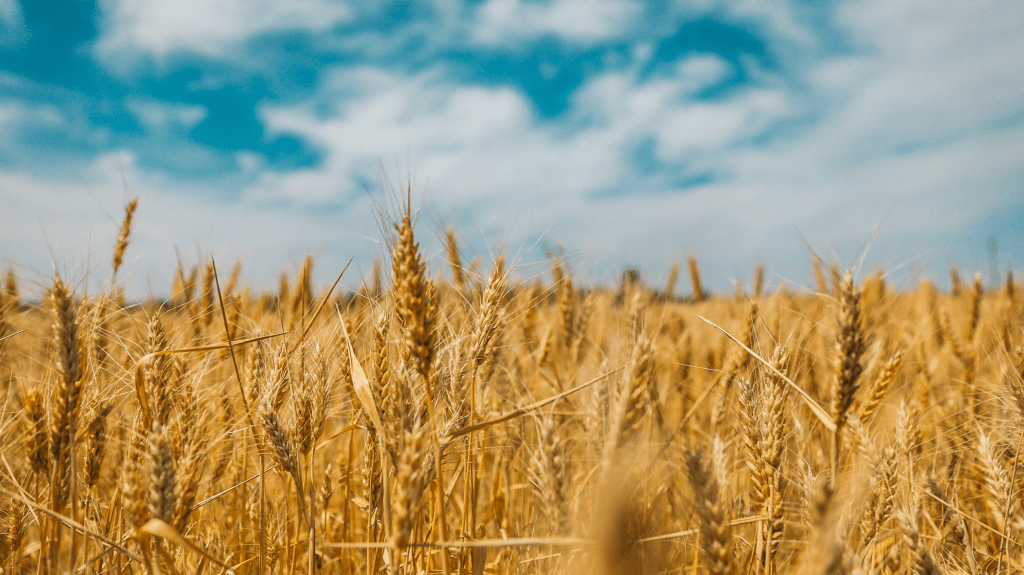
Where malted barley is the only grain ingredient which is used in single malt whisky or blended malt whisky. In Grain Whisky the options are greater and a collection of grains can be used in a mash. Will there be malted barley in there? Sure. But also Rye, Wheat and Maize in various percentages to get the right mix of cost, flavour and yield.
So Step 1 is get all that delivered.
Step 2 – Mill the grains down and make a Wash
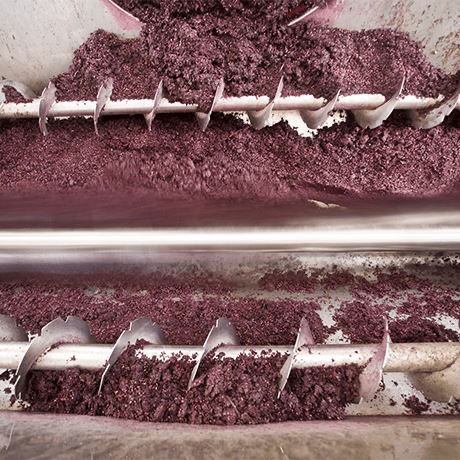
This step is super similar to the malted whisky section. Take grains, grind down to a milled flour and add water with yeast and heat to make a wash.
Step 3 – Ferment the Wash
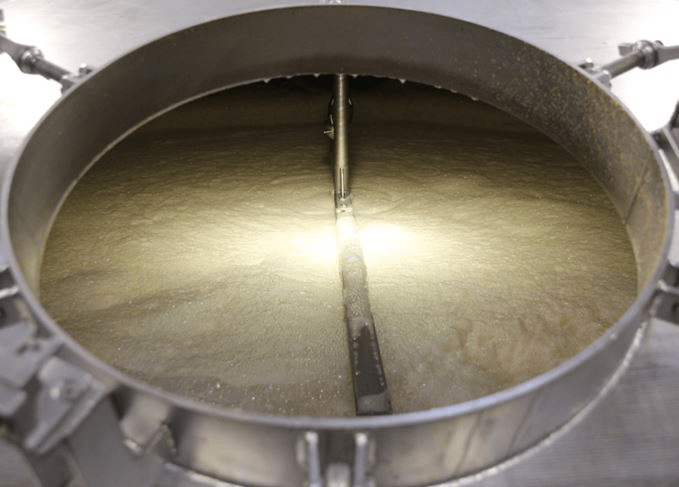
This step is still on solid ground similar to malt whisky production. You will find steel washbacks and not Oregon Pine though. Its all about volume and cost efficiency in Grain production remember.
Step 4 – Distillation
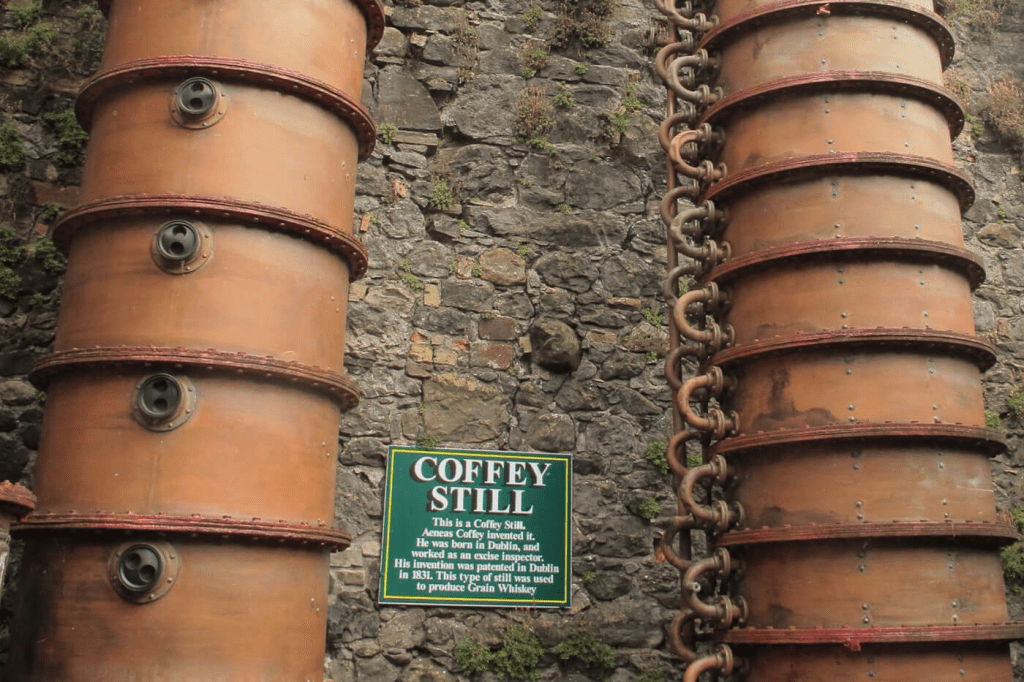
This is the step with the largest set of differences to single malt style whisky.
A continuous still is generally used in grain distillation to produce very high strength alcohol from the grain wash. The below diagram from Wikipedia really helps example things.
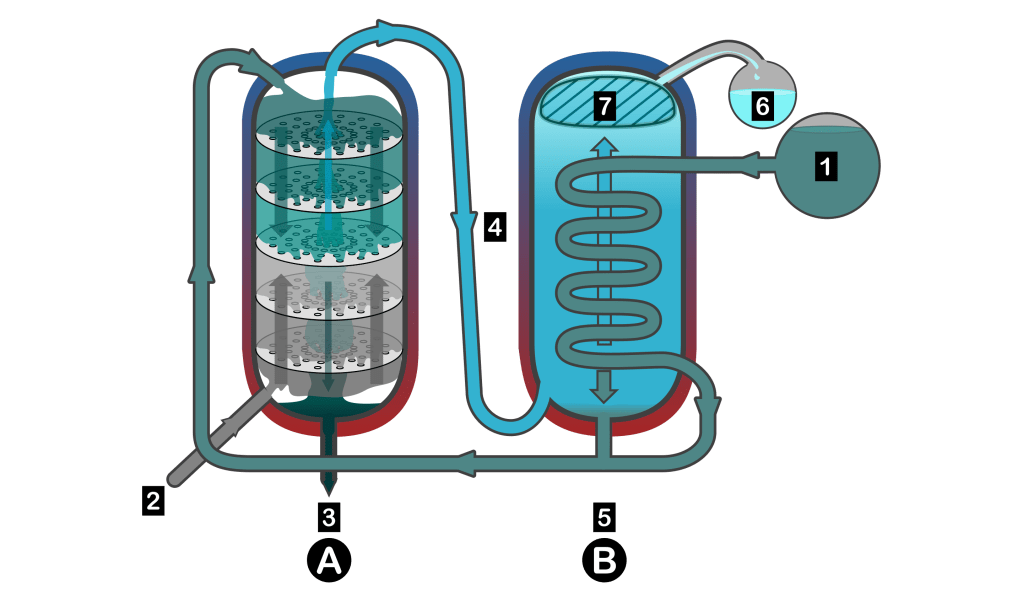
In the above diagram B is the rectifier and A is the analyser, Wash (1) comes into the system via the rectifier into the top of the analyser and meets steam being pumped in from the bottom. The heat distills off alcohol compounds back into the rectifier B before another heating in this container. The heavier compounds will sink to the bottom and be scooped up by the incoming new wash on its way back to the analyser A for another stint of steam heating via the various layers of slats which control the amount of heat/steam hitting the liquid wash.
The cycle continues on repeatedly until the distillation produces light enough compounds that they rise to the top of the rectifier B and are collected at somewhere around 90-95% ABV
Step 5 – Maturation
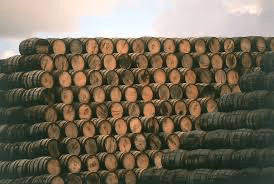
With distillation percentages up at the 90% odd there is little flavour left between the high percentages and the flavourless grains the only flavour you can get from grain whisky is from the wood in maturation.
Lots and lots of grain will go into pretty old and inert casks for a minimum of 3 years before becoming filler into blended whisky. In a blend the flavour profile for the most part will come from the small amounts of single malt used as top dressing to round off the profile.
Some of it will get sold on and become single grain releases though and after a long (long) time of maturation you can get an interesting dram out of it. I probably have a few bottles at the back of the cupboard I will look out and write about soon.
As I write now I remember 5 or 6 years ago a bunch of independent bottlers tried to develop a new market of single grain whiskies marketed as perfect for the summer tipple on the lawn under an umbrella. I didn’t really think it worked at the time and guess has proven me right. There is just too many other things to spend your money on than a 6 year old Strathclyde or Girvan grain whisky.


Leave a Reply