
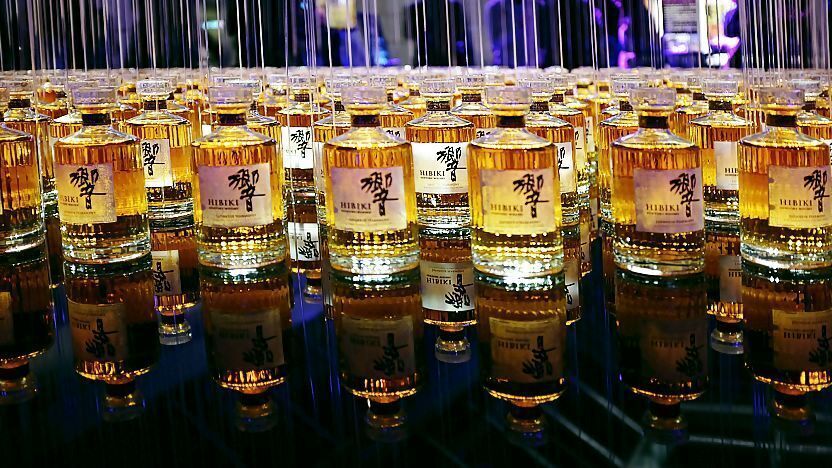
This is starting to become its own little mini-series now.
We have looked at “Scotch” in general but really it was about single malt and then we looked at Grain whisky and compared the production methods of both.
This is the first one which leaves the British Isles and the first thing to point out is the production methods are exactly the same with some interesting little differences which can make a big impact on the variety of products which can be produced. For clarity, for whisky to be called Scotch Whisky it has to be produced to conform to a collection of specific rules which are protected by the Scotch Whisky Association and laid out in UK Law .
Steps 1 – 4
The easiest thing to do here is give me some more views on the blog and read How is Scotch Malt Whisky Made? and then come back here.
Indeed, if I look at English language Japanese distillery websites they use the same single malt diagrams to explain how their whisky is made.
The differences come at the filling and maturation stage
Stage 5 – Filling

I’m sure you enjoyed reading the legislation on Scotch Whisky and now know it must be matured in Oak barrels for a minimum of 3 years. Japan doesn’t have these constraints so they could use any kind of wood. As it happens Japan has its own kind of Oak species which are slow growing and in short supply. Maturation in this wood called Quercus mongolica or more commonly known as Mizunara is hard to work with and is low in tannins and high in Vanilla notes.
Stage 6 – Maturation

Scotland has a fairly stable climate relatively speaking. The band of temperatures and rain is quite close grouped across the country. In Japan that isn’t the case.
Can you get a Scotland like climate in Japan and produce whisky identical to that found in Scotland? Sure you can. Indeed, some people did/are doing exactly that. There are other regions which are much colder, warmer and wetter so location of maturation is an important design decision in the future product and part of the engineering in the maturation phase.
Final Thoughts
The last thing to point out is the big whistle blowing event of 2018 where it became obvious that not all Japanese labelled whisky was actually produced in Japan. With Japanese companies owning Scottish distilleries then there was a trade in moving whisky around the globe to meet demand for Japanese whisky. For more info look at articles like: https://www.forbes.com/sites/chrisperugini/2024/04/24/time-is-officially-up-for-fake-japanese-whisky-what-now/
 Malted
Leave a comment